Pomology
The science of fruit cultivation. Fine-tune tree physiology, harvest, and storage to maximise yield, packout, and returns.

What is pomology?
Pomology is the applied knowledge that turns an orchard into a profitable, sustainable business. It is the biological and physiological science that helps us to understand how trees respond to their environment and our chosen management inputs.
Orchard system design, crop load, and canopy management are the big-ticket items that drive orchard performance. The best combination of inputs boosts fruit quality and marketable yield, while cutting labour costs, minimising risks, and improving sustainability.
Pomology also covers accurate soil moisture monitoring and effective pest and disease control, both of which raise profitability. Precision horticulture technology closes the gap between theory and practice: crop and canopy scans map large areas in detail, enabling variable-rate technology to apply pomological principles with greater precision, scalability, and efficiency than uniform management.
Why pomology matters
Fruit growing is capital- and labour-intensive, so if things go wrong it goes straight to the bottom line.
Take the big one-time decisions: wrong variety, rootstock, plant density, or orchard design can't be fixed once trees are planted. Yield is permanently kneecapped if the trees never fill their space; excessive vigour is the opposite problem, compromising quality and income while adding cost.
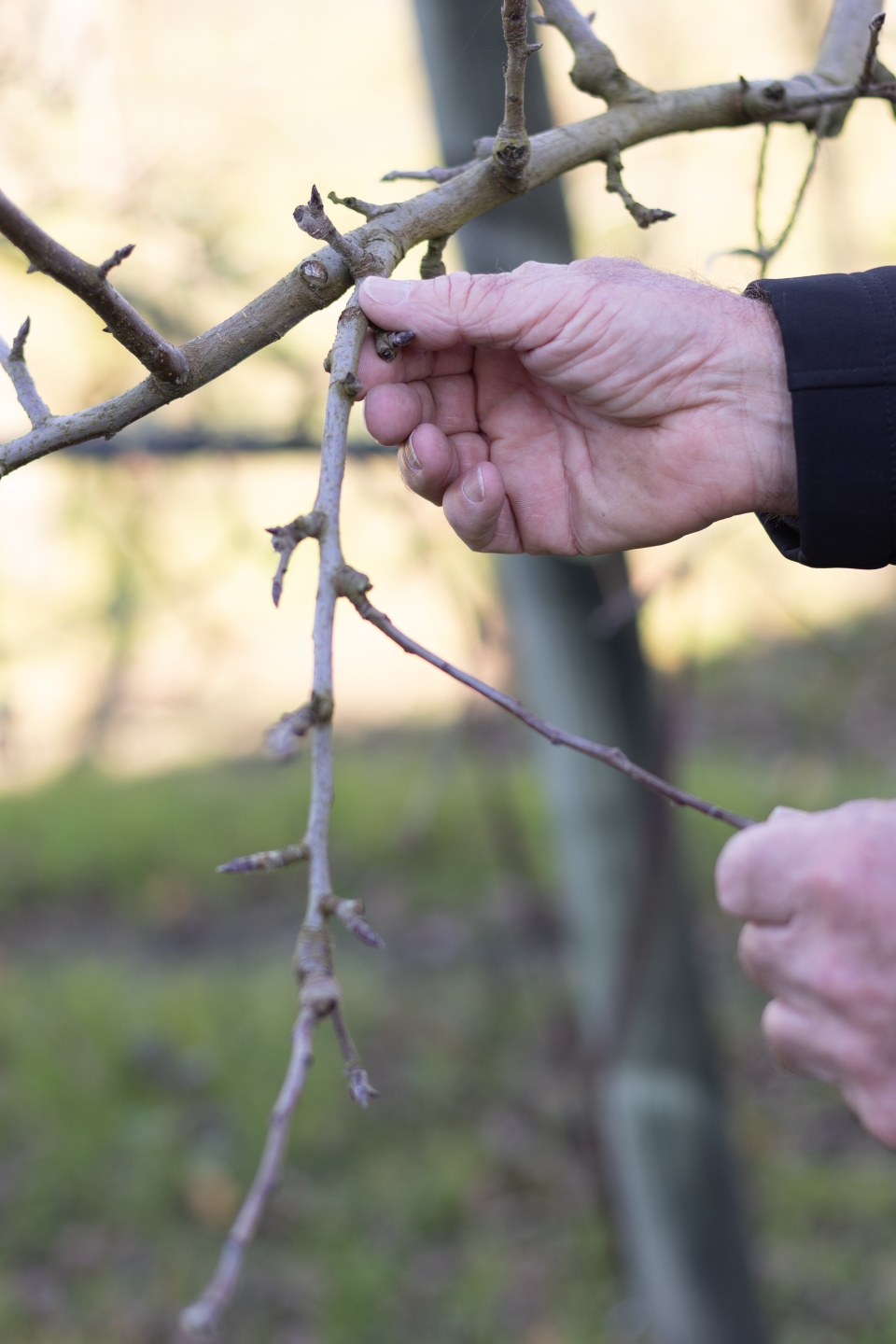
Mistakes within a season can't be undone, but their effects don't last beyond it. Wrong bud-to-fruit ratios at pruning time will mess up your result: prune too hard and you'll have too few fruit and an 'out of the money' size profile. On the other hand, too many buds result in excessive fruit set, high thinning costs, and a handbrake on productivity.
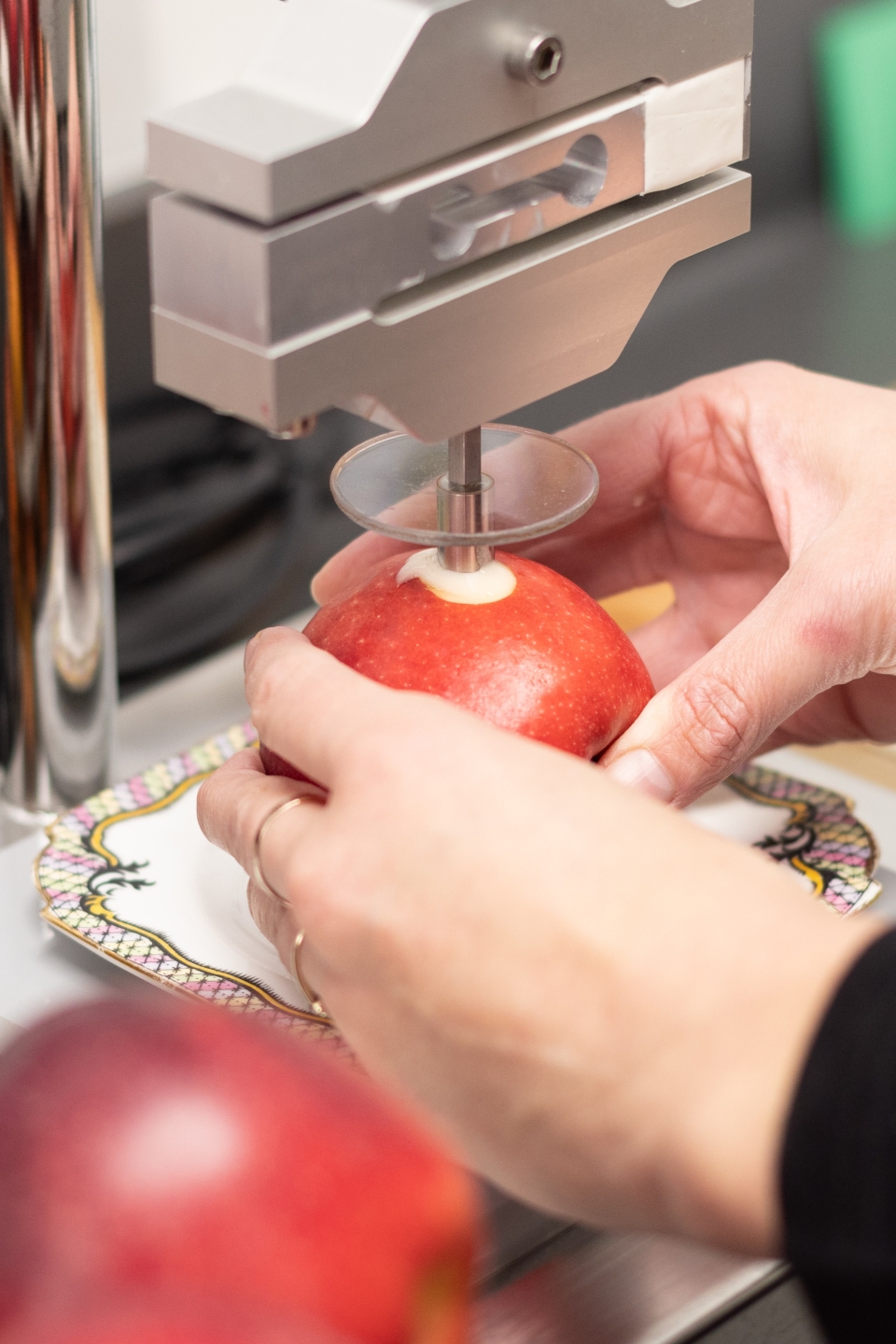
Pruning is just the start, but it lays the groundwork. The same applies at harvest: for both existing and new varieties, picking at the right stage of maturity determines whether fruit reaches the customer in optimum condition. Maturity monitoring and R&D into pre- and post-harvest handling take the guesswork out of that call, so new varieties outturn in best condition. Whatever the task, achieving the right balance for your situation and objectives is key.
How Fruition approaches pomology
Our job is to help you achieve your objectives and get the best from your orchard. Our advice is independent, with no link to input sales or spray programmes. For crop management, the goal is to reach the optimal crop load sooner, more easily, and at lower cost. That is clear and simple, but the challenge lies in executing the right combination of inputs for each individual block.
Growing systems
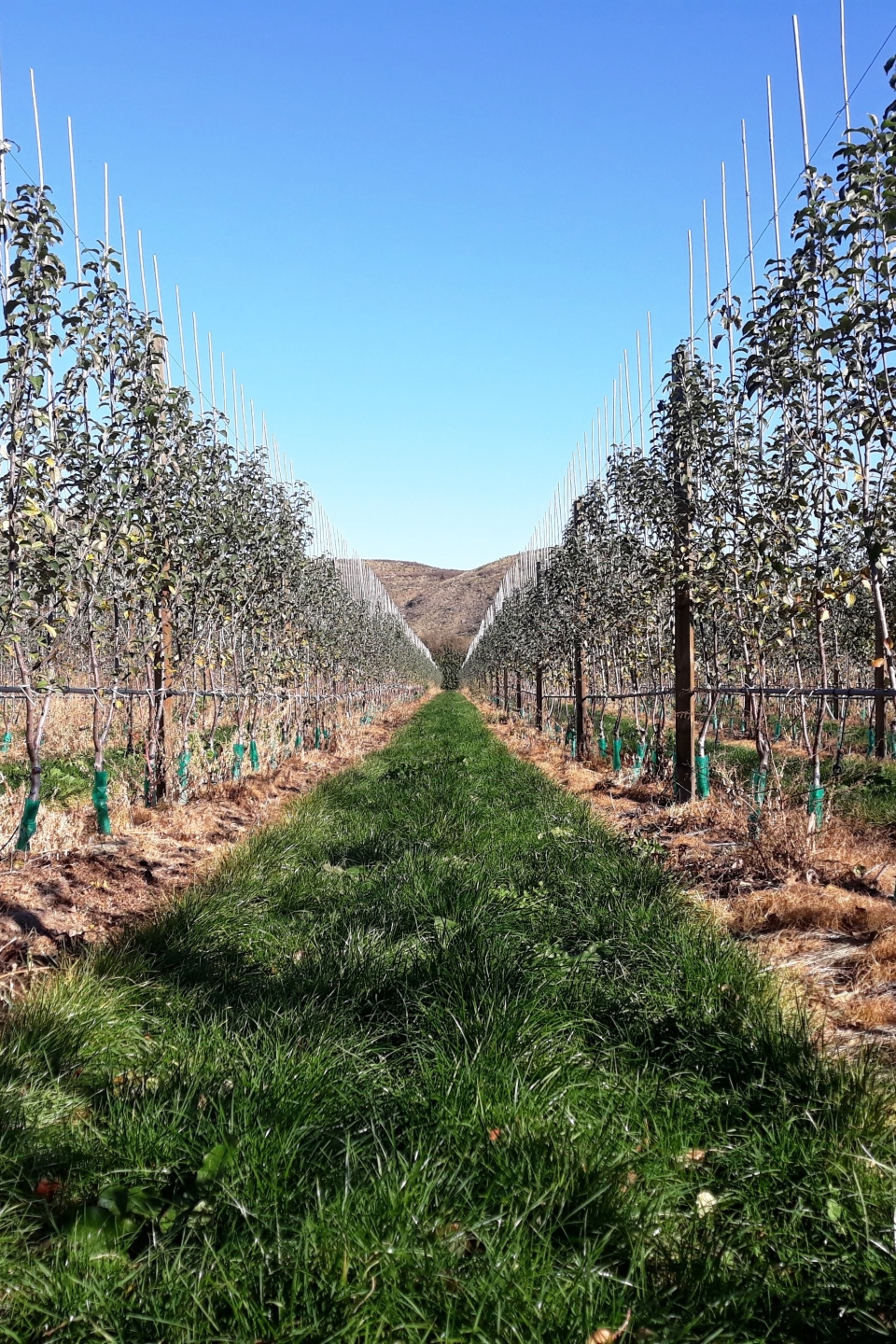
Growing systems are evolving rapidly. Canopies are becoming more planar (thinner) as the industry seeks higher productivity, uniformity, and ease of management. We are actively involved in this development and offer independent advice on canopy design and system choice, including planting density, training system, and rootstock, for new plantings and redevelopments.
Crop and canopy management
We apply new technology to improve the accuracy and uniformity of orchard performance, and the Green Atlas Cartographer is our tool of choice. Its cameras track the crop from buds through bloom and fruitlets to final fruit, showing whether bud and fruit numbers and uniformity are on target, and whether thinning is reaching target numbers without hurting fruitlet growth. Its LiDAR measures canopy density and leaf area, showing whether vigour is balanced for colour, size, and quality, whether the canopy is filling at an acceptable rate, and whether spray volumes are properly calibrated. That tells you when to hit the gas or the brakes with manual, PGR, or mechanical inputs.
New variety development
Working with clients to develop new varieties is a Fruition speciality. Historically it has been a 'lottery of discovery', a piecemeal approach that hasn't served the industry well. We've developed an integrated programme to understand a variety's characteristics, mitigate issues, and establish best commercial practice, from orchard practices that achieve optimal cropping, size, and colour through to harvest and post-harvest handling. The aim is a consistent product that satisfies customers in different markets, which means optimising harvest timing and using tools such as ethephon and 1-MCP to deliver the fruit attributes they want: sugar/acid balance, crisp texture, and freedom from disorders. Our mission is to help stakeholders get the best from their new variety investment.
Coverage & crops
Fruition's pomology consulting in New Zealand is centred on pipfruit (apples and pears), where our core experience and expertise lie. We work across all aspects of the New Zealand and global industry, with clients ranging from private growers and orchard investors to corporate growers, packhouses, and exporters.
We have also contributed to a number of industry programmes. In NZAPI's Smart and Sustainable research project, we ran trials and provided technical advice on sprayer setups and water rate reductions. Over a number of years, we played a key role in early MPI delegations to India, engaging with and providing extension to Indian apple growers. These trips laid important groundwork and established relationships that helped pave the way for the India FTA, which stands to benefit all of New Zealand's primary industries.
We also work with kiwifruit, stonefruit, and grapes through our precision horticulture, pest and disease, and soil and water services.

What our clients achieve
Satisfying orchard financial performance comes down to getting two things right: the one-time decisions on variety and growing system design, and the season-to-season crop and canopy management that follows. Pomology ensures the science is sound, our expertise and experience underpin making the best call, and precision technology makes it executable at scale. For clients, that means a stronger bottom line: optimised revenue from more efficient inputs, reflected in improved packout, better market grade achievement, and confidence in harvest timing.
Got any questions?